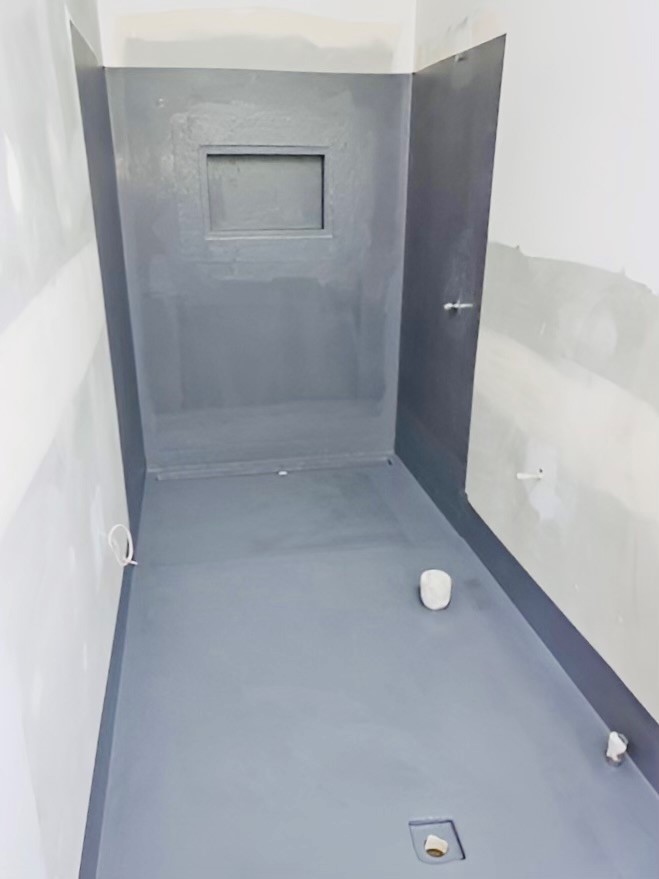
Standard cement-based grout is porous. Epoxy grout is more water resistant, but the membrane and its connections provide the shower’s waterproof barrier. If your shower is already leaking, the next step is to find where the water is getting through. That determines whether the shower needs a localised repair or more extensive work.
Epoxy grout versus low-pressure epoxy infusion
Epoxy grout fills the visible joints between tiles. It is a finish. Replacing deteriorated grout can restore those joints, but it cannot repair a failed membrane.
Low-pressure epoxy infusion introduces resin into identified leaking junctions and voids. Waterseal may use it to repair a localised leak when the condition of the existing shower system allows. Infusion does not replace the waterproofing membrane.
Check the plumbing before assuming membrane failure
Water outside the shower, damp skirting or a stain on the ceiling below can point to several causes. A damaged seal, a waste connection, supply pipework or the membrane itself may be involved. The visible wet patch can be some distance from where the water entered.
Two common checks are supply pipework pressure testing and a waste camera inspection. They help assess the supply and drainage systems before assuming the membrane has failed. The inspection also considers the base, wall-to-floor junctions, penetrations and floor waste.
When a localised shower repair may be suitable
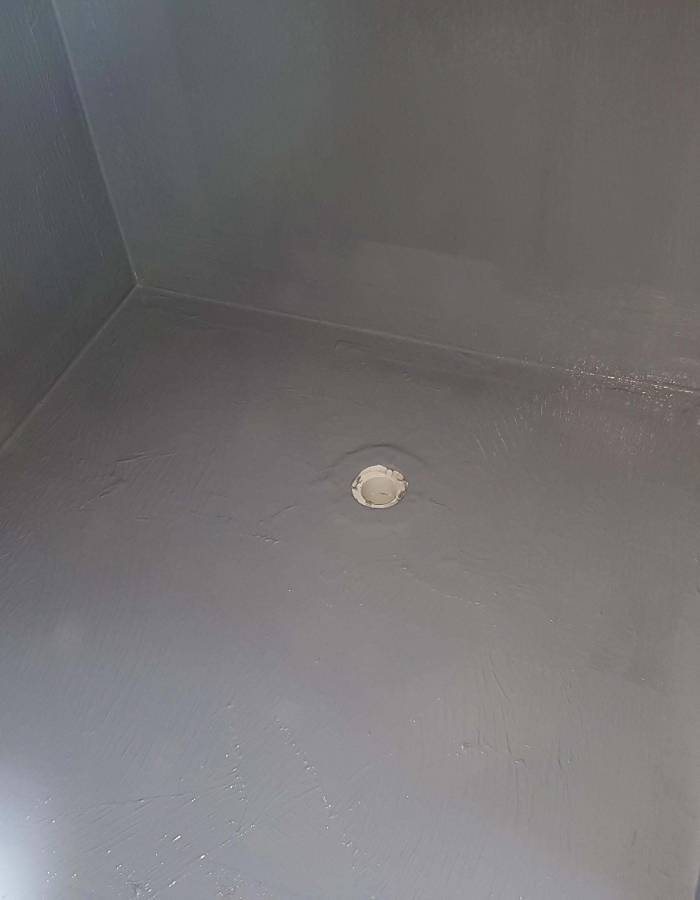
When the leak is localised and the existing system is suitable, Waterseal may remove the affected grout and silicone, infuse the shower base and affected junctions with epoxy at low pressure, then regrout and reseal with sanitary grade, mould resistant silicone. The repair scope depends on the source of the leak and the condition of the surrounding materials.
If the membrane has failed, or there is damage beneath the tiles, the shower may need to be opened up so the waterproofing can be assessed and reinstated. For how the underlying system is installed and detailed, see our shower waterproofing guide.
What to share before a shower assessment
Take photos of the affected area, note when moisture appears and tell us about any previous repairs. Include whether the symptoms show up only after someone uses the shower and whether they appear near the waste, outside the screen or in an adjoining room. These observations help guide the assessment.
If you’re dealing with a recurring leak, contact Waterseal to discuss a leaking shower assessment in Perth.